When the Doctor Doesn’t Listen: Medical Gaslighting & How to Trust Yourself Again

Last Updated on 21 October 2026 by Karolyn
Living with a chronic illness is hard enough without having to fight to be believed too. But if you’ve ever walked out of a medical appointment feeling unheard, dismissed, or worse, even doubting your own experience; then you’re not alone.
That’s medical gaslighting. And it can feel like a gut punch.
This blog post is a gentle guide for spoonies who’ve been brushed off, who have been misdiagnosed, or been told that “it’s all in your head.” But trust me my friends; you’re not imagining it. You are not overreacting. You’re not being difficult. And most of all you deserve care and someone that listens to you.

✔️ Why This Post Matters
💬 You’ve ever been told your symptoms are just stress or anxiety
📋 You’ve had to repeat the same story to 5 different doctors
🧠 You’ve started questioning your own reality or memory
💡 You want to rebuild trust in yourself and the medical system
🌿 You need validation and practical tools to navigate care
🩺 What Is Medical Gaslighting?
Medical gaslighting happens when a healthcare provider dismisses, downplays, or outright ignores your symptoms, concerns, or lived experience. This might sound like:
- “Your test results are normal, so you must be fine.”
- “You’re just too sensitive.”
- “Maybe you’re just anxious or depressed.”
- “You’re young and healthy, this can’t be serious.”
- “You’re reading too much online.”
It chips away at your confidence. Which then can delay diagnoses. And it makes it harder to advocate for yourself, especially when you’re already vulnerable.
If you’re navigating this in the NHS system, it can be even more complex. You might only get ten minutes to explain yourself. There’s a waiting list for everything. And when you’re already exhausted, being told “nothing’s wrong” is infuriating.
And for those who are neurodivergent or neurospicy? It can be even harder. Your communication style might be different. You might struggle to advocate verbally. You might mask symptoms or feel dismissed even more quickly. The system wasn’t built with you in mind but you still deserve care that works for you.
🧠 Why It Hits So Hard (Especially for Spoonies)
When you live with a chronic illness, you already deal with unpredictable symptoms, fatigue, and flare-ups. Add to that the stress of not being believed by your doctor and it’s a whole new level of exhaustion.
And let’s be honest: when someone with authority; a doctor, nurse, or even a specialist in that field tells you your pain doesn’t count? That kind of invalidation hurts. Especially when you’ve finally worked up the energy just to show up.
For some of us, that invalidation doesn’t just stay in the surgery. It follows us home and into the way we speak to ourselves. Into our willingness to seek help next time.
🛑 It’s Not Your Fault
- Your symptoms are real.
- You’re not being dramatic or difficult.
- The system is broken, you are not broken.
👀 Red Flags to Watch For
Not every bad appointment is medical gaslighting but here are some warning signs:
🚩 They talk over you or interrupt
🚩 They focus on your weight or your mental health regardless of your actual symptoms
🚩 They suggest it’s just anxiety without any further testing
🚩 They discourage second opinions or questions
🚩 You leave feeling worse, confused, or doubting yourself
🛠️ How to Respond (Even If It’s Hard)
I know that it’s not always possible to confront medical gaslighting in the moment especially when you’re tired or unwell. But here are a few strategies that can help:
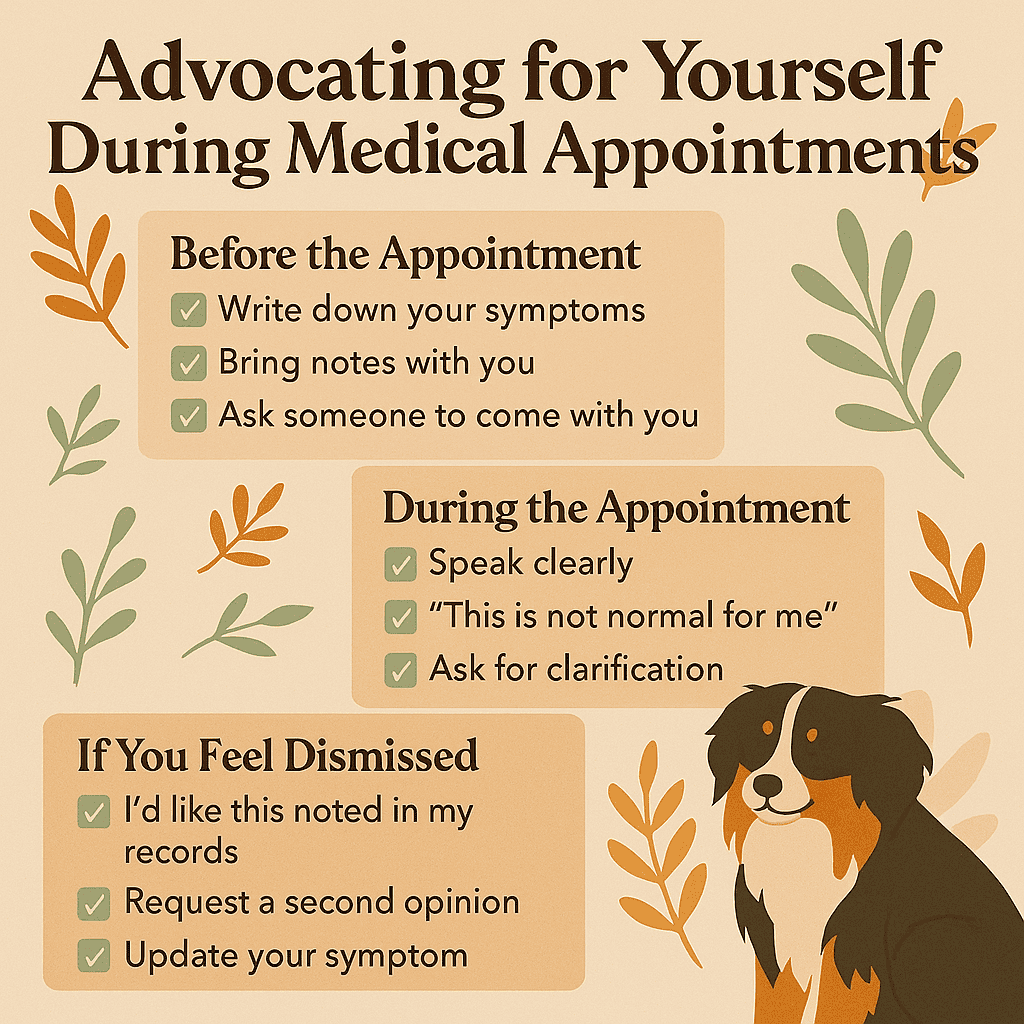
1. Bring Notes.
Write down symptoms, questions, and concerns. It helps you stay grounded and shows you’re serious about your care.
2. Take Someone With You.
Take a partner, friend, or family member can back you up and help advocate when you’re too exhausted to fight.
3. Say It Out Loud.
“I don’t feel like I’m being heard right now.”
“I’m concerned this isn’t being taken seriously.”
“It’s important we explore this further.”
4. Ask for Documentation.
If they dismiss a test or symptom, ask them to note it in your records. It sometimes changes their tone and it creates a paper trail.
5. Trust Your Gut.
If it feels off, it probably is. We know our own bodies the best. Remember that you’re allowed to seek a second opinion, you can switch and chat to a different GP, or request a referral for further investigation.
🧰 Gentle Tools for Hard Appointments
- Scripts for setting boundaries:
- “Can I finish explaining before we move on?”
- “That hasn’t been my experience, can we explore other possibilities?”
- Affirmations before appointments:
- “I am the expert on my body.”
- “I deserve care, even if it’s complex.”
💖 How to Rebuild Trust in Yourself
Gaslighting can make you question your own reality. That’s a horrible place to be. Here’s how I slowly found my way back to trusting me again:
📝 I kept a symptom journal. It helped me notice patterns and remind myself that this is real. (side note, this is also great if you are going through the dreaded PIP process in the UK)
📚 I read other spoonie stories. Community is powerful. It reminded me I wasn’t alone. Online support groups are such a benefit to the disabled community when we need validation and advice.
🐶 I talked it out with my wife and cuddled Wyn (my dog). Both are very good at listening without interrupting.
🧘 I gave myself permission to rest without having to prove I was sick enough.
For my neurodivergent brain, having structure helped. Colour coded symptom tracking apps, voice notes for appointments, and sticking to scripts or questions help me to feel less overwhelmed and more in control especially as it’s super exhausting having to be an advocate for yourself.
🧁 A Personal Note
I once spent 15 minutes explaining the severity of my daily fatigue, only to be told, “Well, everyone’s tired. That’s just life I’m tired too.” After that I cried. Not because of the fatigue but because I’d finally spoken up, and it hadn’t mattered, I hadn’t been listened to.
If that’s been you too, I’m so sorry. You deserve better. We all do.
✨ Some Tips for Advocating Gently
📌 Use a shared symptom tracker or app
📌 Request follow-ups in writing (emails, letters)
📌 Don’t be afraid to ask: “What else could this be?”
📌 You don’t owe proof of pain to deserve care
🥄 Spoonie Tip
You are the expert of your body.
Doctors bring training, but you bring lived experience. You both belong at the table.
❓FAQ – Medical Gaslighting & Trust
Is it still gaslighting if the doctor means well?
Intent doesn’t cancel impact. You can be harmed by someone who thinks they’re doing the right thing.
What if I can’t switch doctors right now?
Keep documentation, bring a support person, and set small goals for each visit.
Is there a way to file a complaint?
Yes every health trust or practice should have a patient advocacy team. You can also contact PALS (UK) or a local health ombudsman.
What if I’m afraid of not being taken seriously again?
That fear is valid. Try rehearsing key points ahead of time, writing them down, or having a trusted person help communicate them.
💬 Let’s Talk
Have you ever experienced medical gaslighting?
What helped you rebuild trust in your body and your care team?
Leave a comment or DM me on Instagram. I see you. I hear you. You’re not alone in this.
💫 Explore the Spoonie Life & Stories Series
What is Spoon Theory? A Gentle Intro to Spoonie Life
Why I Started The Spoonie Chef
Mental Health, Food & Soft Routines
Spoonie-Friendly Kitchen Tools That Actually Help
Weekly Planning with Chronic Illness: Gentle Routines That Actually Work
Planning with Chronic Illness (Without the Guilt)
Spoonie Social Life: Navigating Friendships, Relationships & Chronic Illness
The Rest You Didn’t Choose: Cancelled Plans & Chronic Illness
Spoonie Burnout: When It’s All Too Much
Flare Day Care Kit: What to Keep on Hand
When the Doctor Doesn’t Listen: Medical Gaslighting & How to Trust Yourself Again
Soft Structure: Gentle Routines for Chronic Illness
What to Say When Someone Doesn’t Get Chronic Illness
Celebrating the Small Wins: Joyful Moments in a Spoonie Life
Comfort Food for Flare Days: Spoonie-Friendly Meals That Soothe