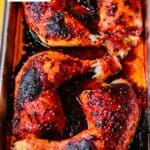
Sticky Gochujang Chicken Legs | Easy Korean Tray Bake Recipe

Last Updated on 2 October 2026 by Karolyn
These gochujang chicken legs are coated in a sticky, sweet and spicy marinade made with gochujang, honey, soy sauce, sesame oil, garlic and ginger, then roasted until glossy and caramelised around the edges.
They’re one of my favourite low-effort dinners when I want plenty of flavour without standing over the hob. Mix the marinade, coat the chicken and let the oven do most of the work.
Serve the chicken legs whole with rice and something fresh and crunchy on the side, or shred the meat for tacos, wraps and rice bowls.
These sticky gochujang chicken legs are one of my favourite easy Korean tray bake recipes when I want something bold with minimal effort.
Accessibility & Energy
Energy needed: Low
Active cooking: Around 10 minutes
Chopping: Very little, just garlic and ginger
Washing up: Low
Can I sit down? Yes for the preparation
Shortcut friendly: Yes. Garlic and ginger paste can reduce the prep even further.
Why You’ll Love These Gochujang Chicken Legs
- Big flavour with very little prep: The marinade takes just a few minutes to mix.
- Sticky and caramelised: Honey helps the gochujang glaze become glossy and slightly charred in the oven.
- One-tray dinner: No separate pan or hob cooking required.
- Make them ahead: You can marinate the chicken in advance and put it straight into the oven at dinner time.
- Easy to serve different ways: Keep the legs whole or shred the cooked chicken for tacos and bowls.

What Is Gochujang?
Gochujang is a Korean fermented chilli paste with a spicy, savoury and slightly sweet flavour.
It’s quite concentrated, so a few tablespoons can form the base of a really flavourful marinade. Here I combine it with honey, soy sauce, sesame oil and rice vinegar, then add garlic and ginger.
The honey adds sweetness and helps the outside of the chicken caramelise as it roasts, while the vinegar brings some acidity to balance the glaze.
Ingredients
You’ll need:
- 4 whole chicken legs, thigh and drumstick attached, about 1.2 kg total
- 3 tbsp gochujang
- 2 tbsp soy sauce
- 2 tbsp honey
- 1 tbsp sesame oil
- 1 tbsp rice vinegar
- 2 garlic cloves, grated
- 1 tsp fresh ginger, grated, or ginger paste
- 1 tbsp sesame seeds
- 1 tsp gochugaru, optional, for extra heat
Ingredient Notes
Chicken legs: I’m using whole chicken legs here, with the thigh and drumstick still attached. This is worth making clear because “chicken legs” can sometimes be used to mean drumsticks alone.
Gochujang: Brands can vary in heat and sweetness, so bear that in mind if you’re trying a new one.
Honey: Adds sweetness to balance the chilli paste and helps create that sticky finish.
Soy sauce: Brings saltiness and savoury depth to the marinade.
Rice vinegar: Cuts through some of the sweetness without making the marinade particularly sharp.
Gochugaru: Completely optional. Add it if you’d like a little more heat alongside the gochujang.
How to Make Sticky Gochujang Chicken Legs
- Preheat the oven to 200°C / 180°C fan. Line a large roasting tray or use a foil roasting tray to make cleaning up easier.
- Add the gochujang, soy sauce, honey, sesame oil, rice vinegar, garlic and ginger to a bowl. Whisk until smooth, then stir in the sesame seeds and optional gochugaru.
- Place the chicken legs in the roasting tray and spoon the marinade over them, turning until they’re thoroughly coated.
- If you have time, cover and refrigerate the chicken for 30 minutes or longer to marinate. You can also cook it straight away.
- Roast for 40–45 minutes, turning halfway through, until the chicken is cooked through and the glaze is sticky and caramelised.
- Check the thickest part of the chicken has reached at least 75°C, taking care not to touch the bone with the thermometer.
- Rest for 5 minutes before serving. Spoon some of the cooked glaze and tray juices over the chicken for an extra glossy finish.
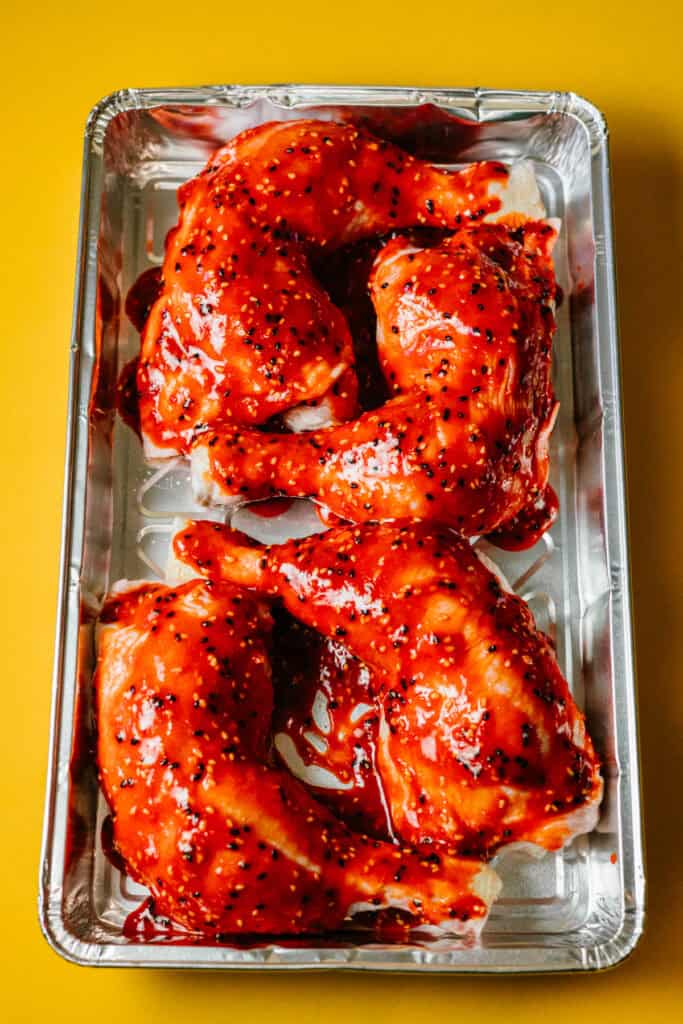
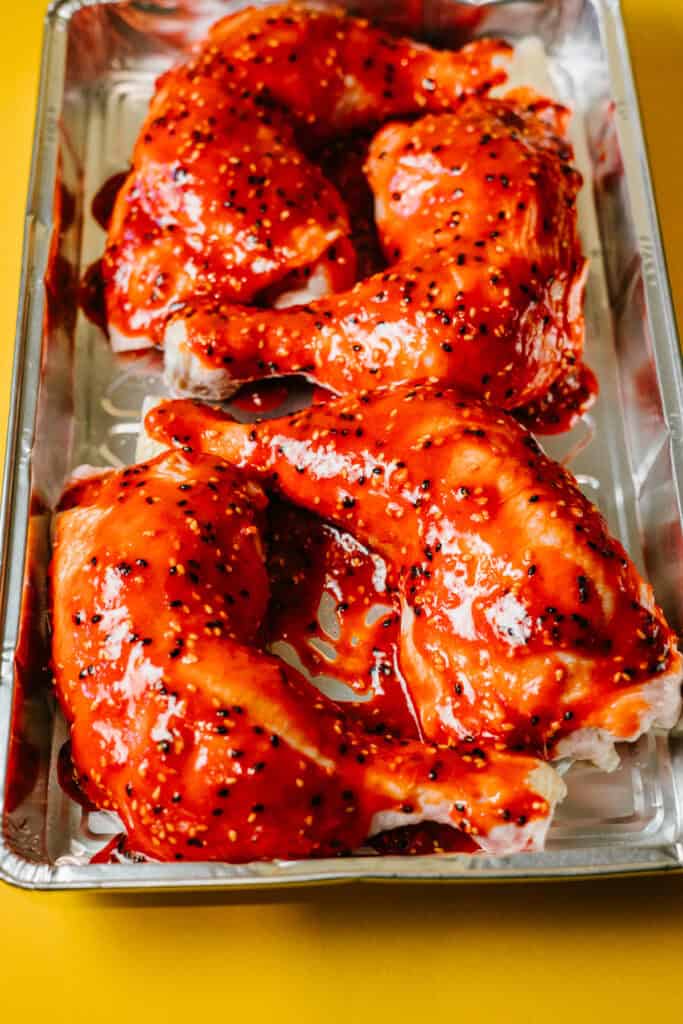
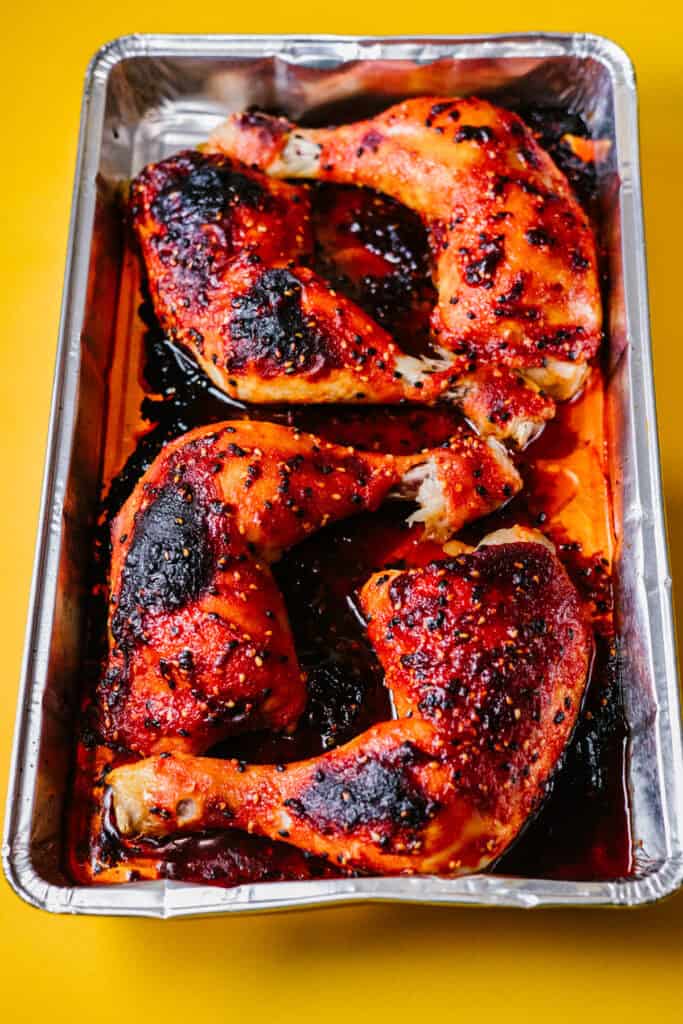
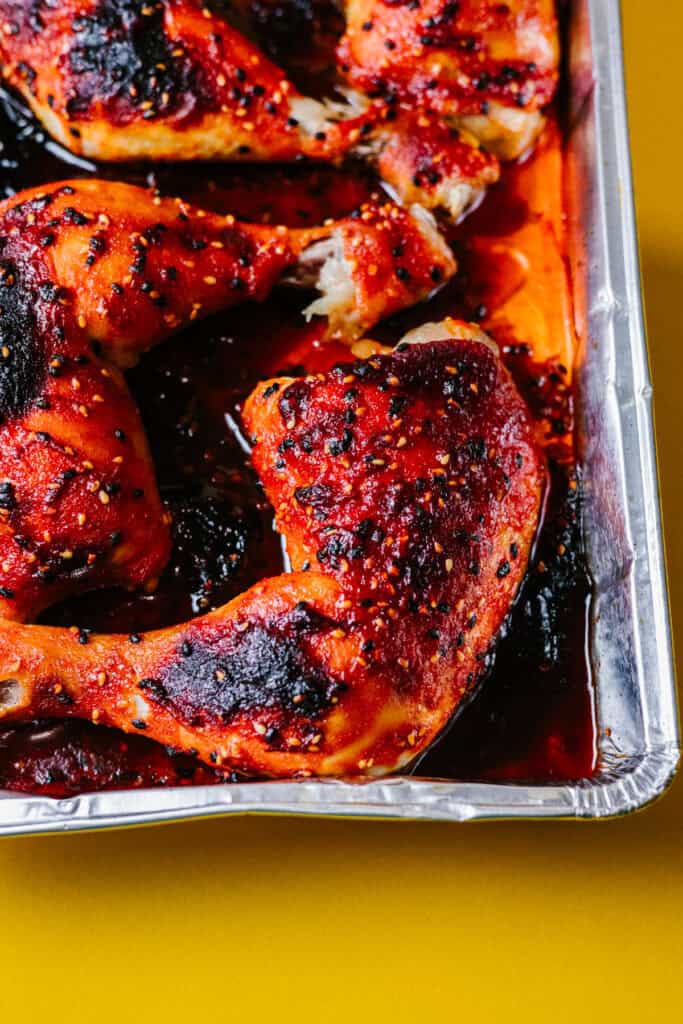
How to Get Sticky, Caramelised Gochujang Chicken
There’s quite a lot of sugar in both the honey and gochujang, which is exactly what gives you those lovely caramelised edges.
It also means the glaze can catch if it gets too hot.
Keep an eye on the chicken towards the end of cooking. You want dark, sticky edges rather than completely burnt marinade. If it’s colouring too quickly before the chicken is cooked through, loosely cover the tray with foil.
And don’t skip the five-minute rest. Apart from resting the meat, it gives you a chance to spoon some of those sticky cooked tray juices back over the chicken.
Can You Marinate Gochujang Chicken Overnight?
Yes. This is an easy recipe to prepare ahead if you want to remove most of the work from dinner time.
Mix the marinade, coat the chicken, cover and refrigerate it. Then you can transfer it to the oven when you’re ready to cook.
Even if you don’t have time to marinate it, though, the recipe still works. The chicken gets plenty of flavour from being thoroughly coated before roasting.
Air Fryer Gochujang Chicken Legs
You can also cook the chicken legs in the air fryer at 190°C for 25–30 minutes, turning halfway through.
Because air fryers vary considerably in size and power, use the cooking time as a guide and check that the thickest part of the chicken has reached 75°C before serving.
Keep an eye on the glaze towards the end because the sugars can caramelise quickly.
Make this recipe your own
Make it hotter: Add the optional gochugaru or additional chilli flakes.
Add citrus: A little orange zest works nicely with the sweet-spicy glaze.
Add some crunch: Finish the cooked chicken with chopped peanuts or crispy shallots.
Use garlic and ginger paste: A useful shortcut if grating fresh garlic and ginger isn’t happening today.
✨ Expert Top tips
Watch the glaze towards the end. Gochujang and honey can darken quickly as the chicken finishes roasting.
Use a meat thermometer. Check the thickest part of the chicken rather than relying on colour or clear juices.
Don’t overcrowd the tray. Give the four chicken legs enough room to roast rather than steam.
Marinate if convenient, not compulsory. You’ll get extra time for the flavours to mingle, but you can absolutely cook the chicken immediately.
Spoon over the cooked tray juices. They give the finished chicken that glossy, sticky appearance.
🥄 Spoonie tip:
If washing another bowl isn’t happening, mix the marinade directly in the roasting tray, add the chicken and turn it with tongs until coated. Garlic and ginger paste are also completely reasonable shortcuts here. Once the chicken goes into the oven, there’s very little active cooking beyond turning it halfway through and checking the temperature at the end.
Gochujang Chicken Legs FAQs
They’re sweet, spicy, savoury and slightly tangy, with a sticky glaze that caramelises as the chicken roasts. The exact heat will depend partly on the gochujang you’re using.
I’d describe these as moderately spicy, but gochujang brands vary considerably. If you’re sensitive to heat, leave out the optional gochugaru. If you like things hotter, add it.
Yes. Coat the chicken in the marinade, cover and refrigerate until you’re ready to cook it.
The cooking time given here has been tested for whole chicken legs weighing around 1.2 kg in total. If you substitute smaller chicken pieces, they’ll cook more quickly, so don’t automatically use the same 40–45 minute cooking time. Cook until they reach a safe internal temperature.
Yes. Cool the cooked chicken before freezing it in a suitable airtight container for up to 2 months. Defrost it thoroughly in the fridge before reheating.
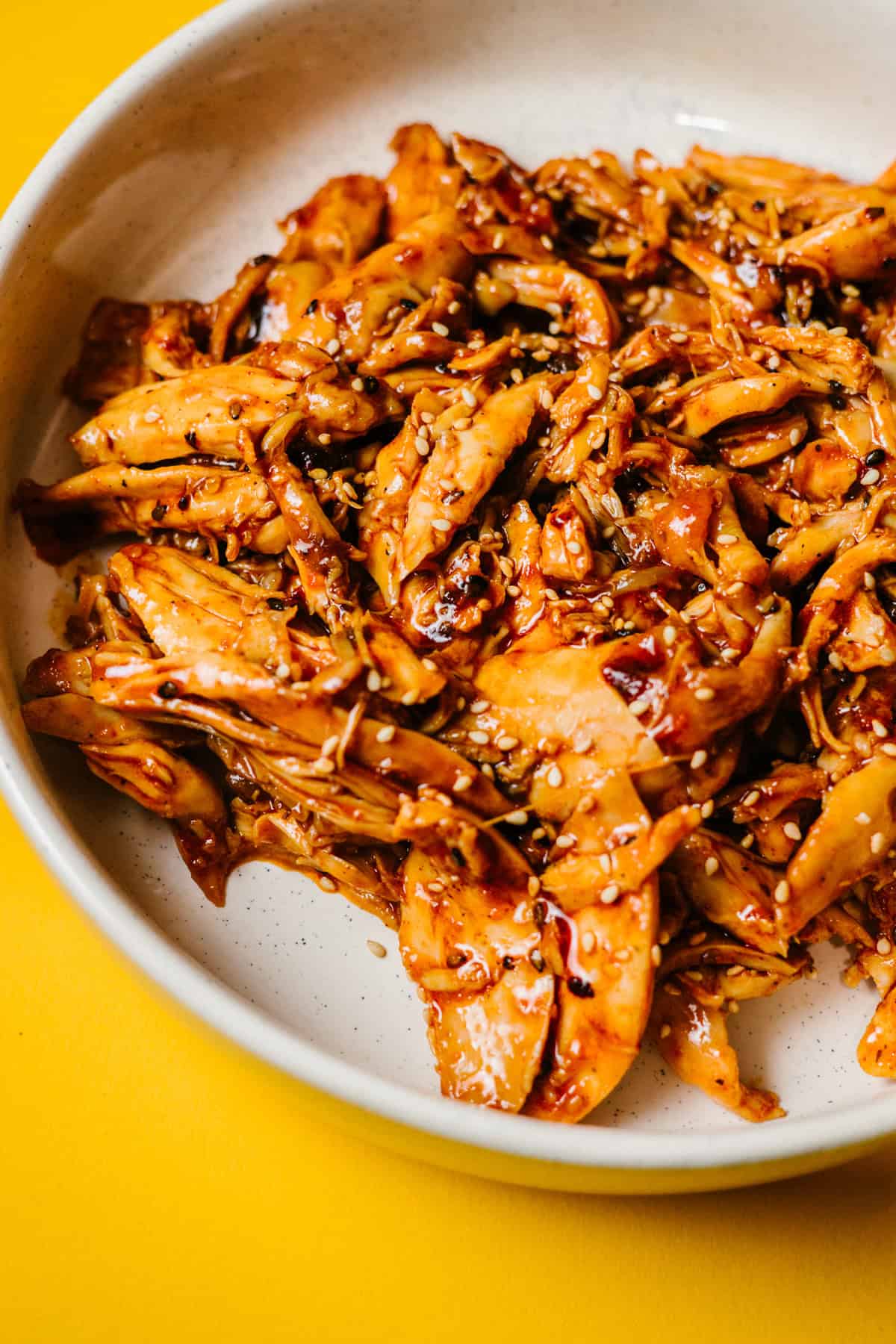
Rice is probably my simplest choice. Something crunchy and acidic alongside it is particularly good because it cuts through the rich sticky glaze. My quick pickled carrots and cucumber, slaw or kimchi all work well. You can also remove the meat from the bones and use it in tacos or wraps.
Storage and Reheating
Store leftover cooked chicken in an airtight container in the fridge for up to 3 days.
Reheat in the oven or air fryer until piping hot throughout. If you’ve shredded the chicken, you can also warm it gently in a pan with a small splash of water to loosen the glaze.
For longer storage, freeze the cooled chicken for up to 2 months and defrost thoroughly in the fridge before reheating.
More Recipes for Gochujang Fans
If you’ve now got an open tub of gochujang in the fridge, I’ve got plenty of ways to put it to work.
My spicy gochujang shredded tofu noodles give you the same sweet-spicy flavour in a completely different dinner.
Or shred this chicken and turn it into my Korean chicken tacos with kimchi salsa or quick pickled carrots and cucumberalongside.
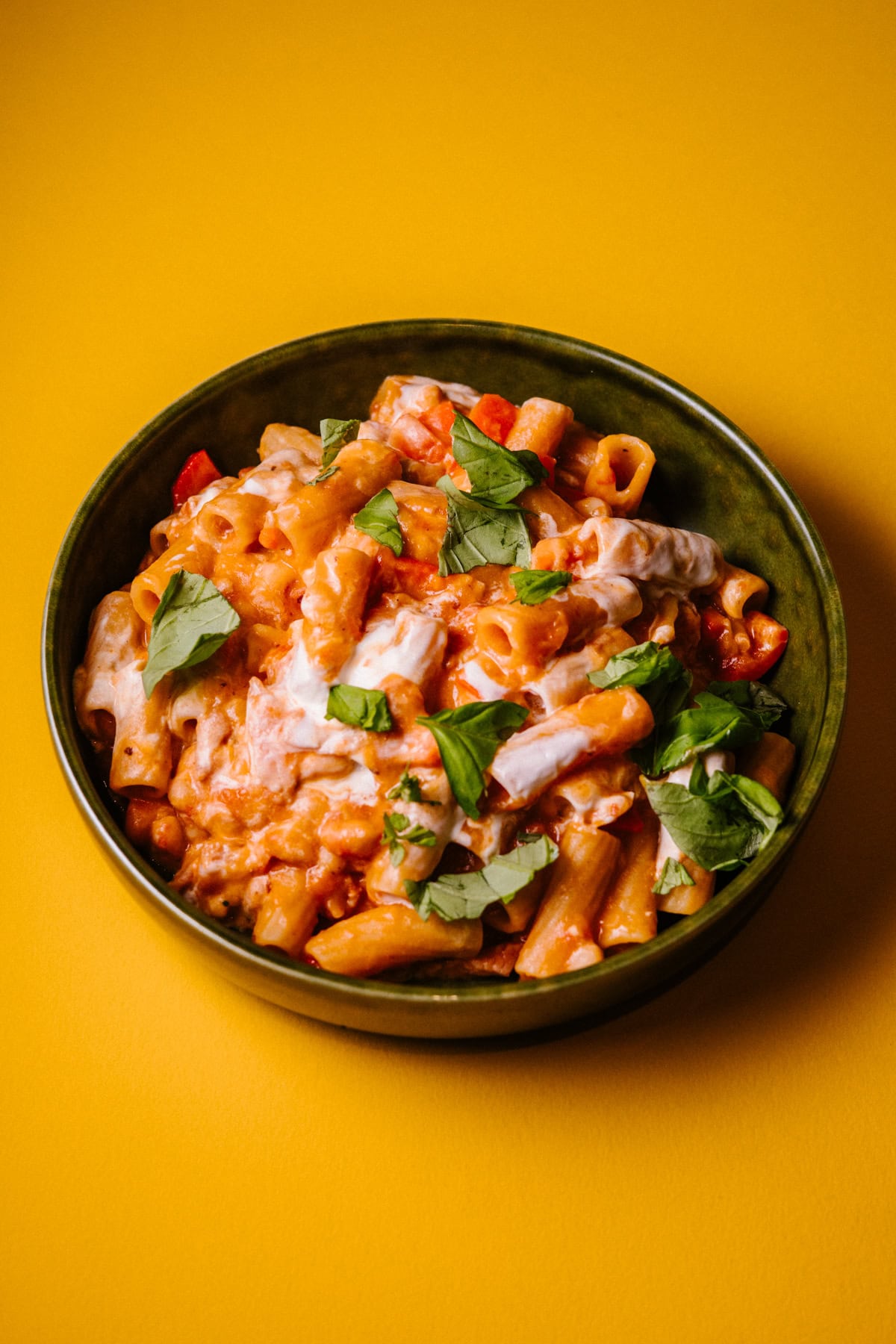
And if you want another excuse to get the gochujang tub out, my gochujang sausage pasta turns it into a creamy, spicy weeknight dinner.
How Are You Serving Yours?
Whole with rice or shredded straight into tacos?
If you make these sticky gochujang chicken legs, leave a rating and comment below and let me know how you served them.
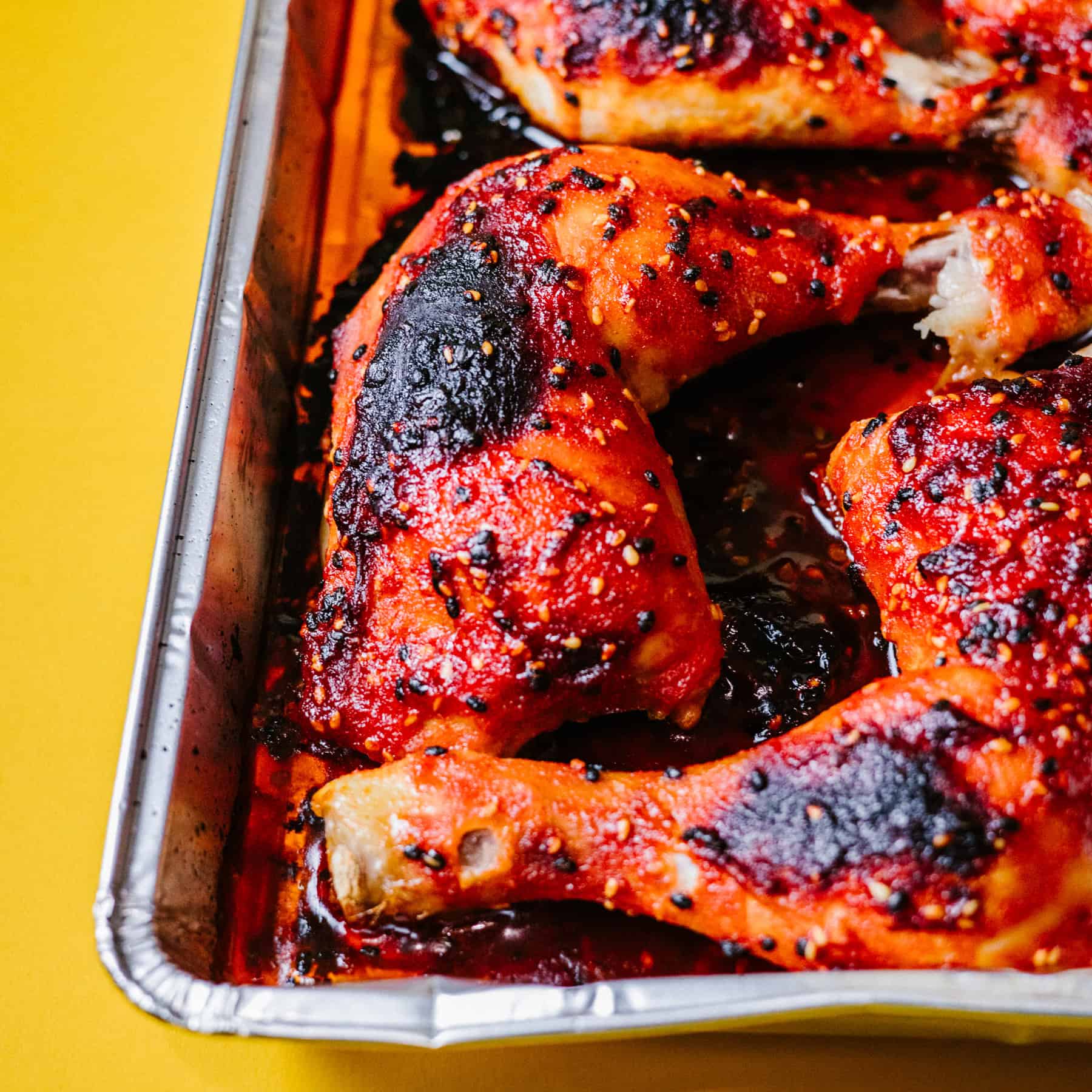
Sticky Gochujang Chicken Legs (Easy Korean Tray Bake Recipe)
Ingredients
- 4 chicken legs thigh + drumstick attached
- 3 tbsp gochujang
- 2 tbsp soy sauce
- 2 tbsp honey or brown sugar
- 1 tbsp sesame oil
- 1 tbsp rice vinegar
- 2 garlic cloves grated
- 1 tsp grated ginger
- 1 tbsp sesame seeds
- 1 tsp gochugaru extra heat
Equipment
- Baking tray or foil roasting tin – I like using foil tins for easy cleanup.
- Mixing bowl – for whisking up that gochujang marinade.
- Tongs or spoon – to coat and turn the chicken evenly.
- Pastry brush (optional) – handy for brushing on extra sauce halfway through baking.
- Meat thermometer – if you’re checking doneness; aim for 75°C internal temperature.
- Air fryer – if you’re using the alternative cooking method.
Instructions
- Preheat oven to 200°C (fan 180°C). Line a baking tray with foil.
- In a bowl, whisk gochujang, soy sauce, honey, sesame oil, rice vinegar, garlic, and ginger. Stir in sesame seeds.
- Place the chicken legs on the tray and spoon the marinade over. Turn to coat evenly.
- Leave to marinate for 30 minutes to a few hours if you have time. You can also cook it straight away.
- Roast for 40–45 minutes, turning halfway through, until the chicken is cooked through, sticky, and slightly charred at the edges.
- Let the chicken rest for 5 minutes, then baste with the tray juices before serving.
- Cook at 190°C for 25–30 minutes, flipping halfway through.
- Brush with extra marinade near the end for a deeper sticky glaze.
Nutrition
Notes
Notes ✨
- Line your tray with foil or parchment for easier clean-up.
- Gochujang caramelises quickly, so keep an eye on the edges.
- Double the sauce if you want extra for rice or noodles.
- The flavour deepens if left overnight, making this great for meal prep.
- Marinating: Even a 20-minute marinade helps the flavour sink in. Overnight is best if you’ve got time.
- Don’t waste that tray sauce: Pour it over rice or use as a dipping glaze for crispy tofu or veggies.
- Spice level: Medium heat – balance it out with extra honey or yoghurt if you prefer it milder.
- Storage: Store cooked chicken in an airtight container in the fridge for up to 3 days or 2 months in the freezer once shredded. Defrost overnight in the fridge and reheat until piping hot.
- Reheating: Reheat in the oven or air fryer until hot. You can also warm it in a pan with a splash of water to loosen the sauce.
- Gluten-free? Use tamari as an alternative to soy sauce.
Serving Suggestions
- Serve with steamed jasmine rice and a quick cucumber salad.
- Shred the chicken and stuff into soft tortillas with kimchi salsa and a drizzle of chipotle crema.
- Pair with Asian-style slaw or pickled radish greens for freshness.
- Add leftovers to fried rice or noodle bowls for easy lunches.